- Utkarsh Urvashi CHS, 1st Floor, Veshvi, Alibag
- info@sahyadriworldtrade.com
- Open: Mon–Sat: 08:00 – 18:00
Frozen Food Export From India: Top Products, Global Buyers & Export Opportunities in 2026
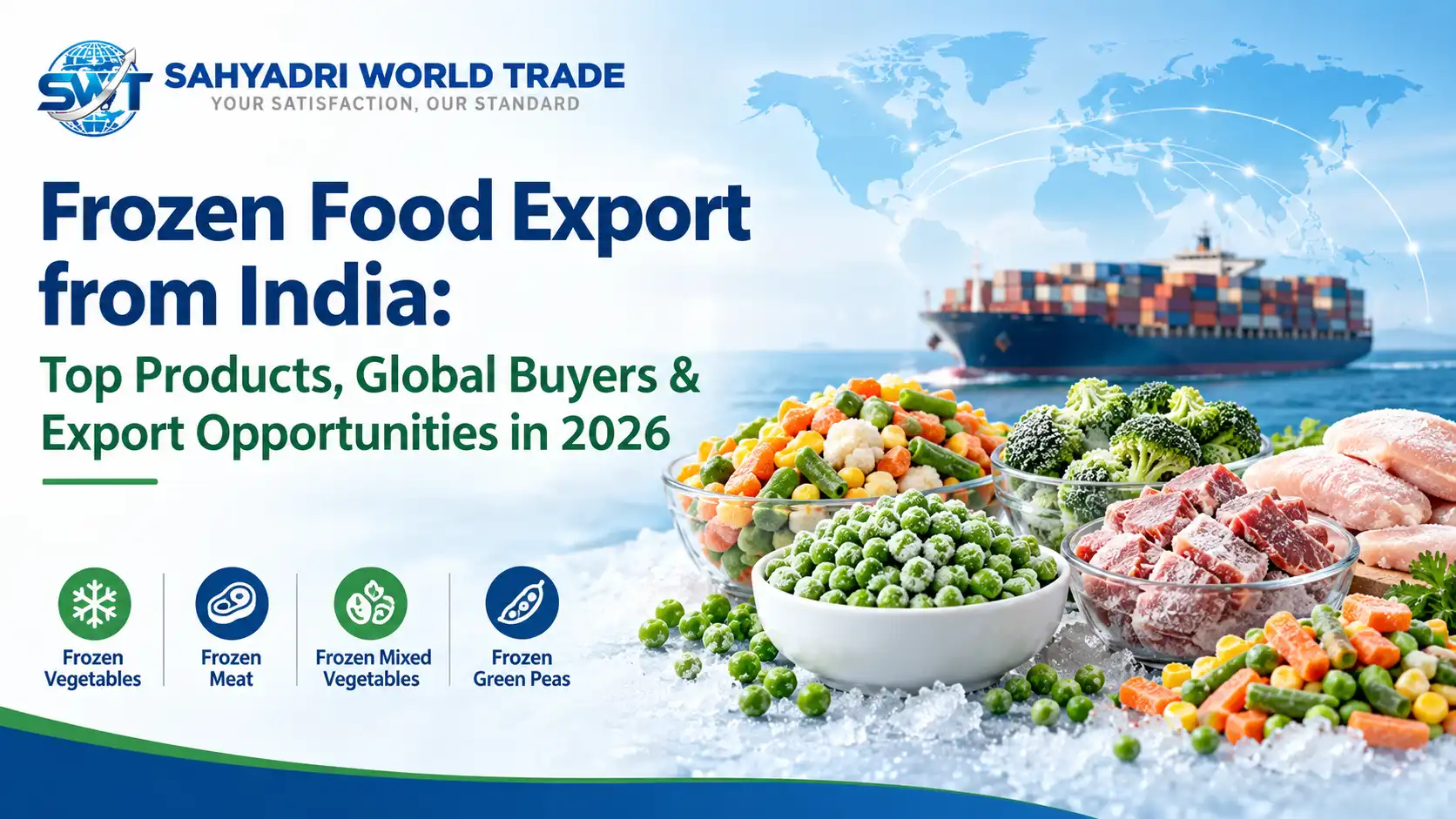
Frozen Food Export From India: Top Products, Global Buyers & Export Opportunities in 2026
For an importer, sourcing frozen food from India is not simply about finding a competitive price. Product consistency, specifications, packaging, cold-chain continuity, documentation and shipment execution all affect the commercial outcome.
That is why buyers researching frozen food export from India usually need two answers: what can India supply, and how can they source it reliably?
What Frozen Foods Does India Export?
Indian suppliers can offer a broad range of frozen food products for export, depending on processing capacity, seasonality, buyer specifications and destination requirements.
Major categories include frozen vegetables such as frozen green peas, frozen mixed vegetables, corn, cauliflower, broccoli, okra, spinach, beans, carrots, diced vegetables and cut vegetables.
Frozen fruits may include mango, strawberries, berries, banana and pineapple. The market also includes frozen snacks and ready-to-eat foods such as frozen paratha and samosa, as well as selected foodservice products.
Frozen meat is a separate category. Indian exporters and processors can supply products such as buffalo meat and other animal-origin foods, but these require product-specific veterinary, food-safety and importing-country compliance. Buyers should therefore avoid treating meat exports in the same way as frozen vegetable shipments.
Why Frozen Vegetables Matter to International Buyers
Frozen vegetables can help wholesalers, retailers, restaurants and food manufacturers manage supply beyond fresh-produce seasons while offering convenient, standardized ingredients.
Frozen green peas are one familiar example. Frozen mixed vegetables are widely useful for foodservice, catering and food manufacturing because multiple vegetables can be supplied in a consistent, convenient format.
Other commercially relevant products include frozen corn, cauliflower, broccoli, okra, spinach, beans and various cut or diced vegetables.
For bulk buyers, the important question is not simply whether a product is available. It is whether the supplier can consistently match the required grade, cut, pack size, shelf life, labeling and shipment schedule.
Who Buys Frozen Food From India?
Potential customers include:
- Frozen food importers and distributors
- Wholesalers and supermarket buyers
- Restaurants, hotels and catering businesses
- Foodservice companies
- Food manufacturers and processors
- Retail and private-label buyers where supported
International demand can come from markets across the Gulf, including the United Arab Emirates, Saudi Arabia, Qatar, Oman, Kuwait and Bahrain, as well as markets such as the United States, United Kingdom, Canada, Australia, Germany, Netherlands, France, Belgium, Singapore, Malaysia and South Africa.
Actual market access varies by product, supplier eligibility and destination-country regulations. A retail buyer may prioritize consumer-ready packaging and labeling, while a food manufacturer may place greater emphasis on bulk formats, specification consistency and batch documentation.
How Does Frozen Food Export From India Work?
A practical frozen food export process starts with a detailed buyer specification.
The enquiry should define the product, grade or cut, quantity, packaging, shelf life, destination, documentation requirements and delivery schedule. The supplier can then assess availability and identify an appropriate processor or sourcing channel.
After sourcing, quality inspection, packaging and documentation become critical. Depending on the product and destination, documents may include a commercial invoice, packing list, shipping bill, bill of lading and certificate of origin, along with additional certificates or reports where required.
Indian food businesses may also need to consider requirements involving FSSAI, APEDA and DGFT. Meat and other animal-origin products may involve additional health, veterinary, establishment or import approvals.
There is no single universal list of frozen food export requirements. Requirements should be confirmed against the product, HS code, origin, destination country and buyer's specifications before shipment.
Frozen Food Cold Chain, Storage and Shipping
The frozen food supply chain depends on maintaining appropriate conditions from processing or frozen storage through international delivery.
Depending on the product and shipment structure, this can involve frozen storage, refrigerated transport and reefer containers. Buyers should establish the required storage temperature, handling procedure, loading conditions, transport mode, monitoring process and expected shelf life before placing an order.
Frozen food packaging also deserves attention. Packaging should be suitable for frozen storage and the shipping route, with appropriate protection against handling damage and moisture-related problems.
Labels may need details such as product name, net weight, batch or lot number, production or packing date, expiry or best-before information, storage instructions and country-of-origin information, depending on destination rules.
What Quality Standards Should Buyers Check?
International buyers should evaluate frozen food suppliers in India on more than price.
Before a bulk order, buyers should check:
Product specification: Exact variety, grade, cut, size and permitted tolerances.
Batch consistency: Whether the supplied product can match the approved sample and agreed specification across repeat shipments.
Shelf life: Remaining usable shelf life at dispatch and expected arrival.
Traceability: Lot or batch identification and relevant supplier records.
Inspection: Pre-shipment inspection, photographs or independent inspection where required.
Testing: Microbiological, pesticide, residue, moisture or other product-specific laboratory testing when applicable.
Compliance: Relevant food-safety registrations, certifications and destination-market requirements.
This is particularly important when comparing frozen vegetable exporters from India, frozen meat exporters from India or broader bulk frozen food suppliers. A written product specification creates a much clearer purchasing standard than broad claims such as "premium quality."
What Affects Frozen Food Export Pricing?
The price of frozen food can change with raw-material availability, seasonality, processing costs, packaging, order volume, frozen storage, freight, destination, Incoterms, payment terms and documentation.
For this reason, a quotation should make clear what the price includes and whether it is based on FOB, CIF or another agreed Incoterm.
For bulk procurement, buyers should also consider MOQ, lead time, freight, shelf life and repeat-order availability rather than comparing only the headline price.
How Can Businesses Source Frozen Food in Bulk From India?
Start with a precise commercial enquiry.
Include the product name, required quantity, preferred specification, packaging format, destination port, expected delivery schedule and any required certificates or laboratory reports.
Ask potential frozen food manufacturers in India, exporters or sourcing companies how they handle supplier selection, quality inspection, frozen storage, packaging, documentation and shipment coordination.
A trial order can also help an importer assess product conformity, communication, packaging and shipment execution before moving to larger repeat orders.
This approach can be particularly useful for frozen food importers, frozen food distributors and foodservice buyers looking to build a dependable supply relationship rather than purchase through one-off transactions.
Frozen Food Export Opportunities in 2026
The opportunity extends beyond a single product. Indian suppliers can potentially serve retail, foodservice, wholesale and food-processing demand where buyers need standardized products and dependable bulk supply.
For exporters, opportunity depends on product-market fit, compliance, processing capability, competitive commercial terms and the ability to execute repeat shipments.
For international buyers, the value is often in finding a supplier that can reduce procurement complexity while maintaining control over specifications, documentation, packaging and the frozen food cold chain.
Why Consider Sahyadri World Trade for Frozen Food Sourcing?
Sahyadri World Trade is an India-based B2B export and trading company established in 2025, using a multi-category sourcing model covering frozen foods alongside agricultural products, spices, dehydrated products, dairy, textiles, handicrafts, disposables and engineering products.
For businesses exploring frozen food sourcing from India, Sahyadri World Trade coordinates buyer requirements, supplier identification, quality checks, packaging, export documentation and shipment planning according to the agreed product and destination requirements.
Its broader sourcing model can also suit importers and distributors managing several Indian procurement categories through one business relationship.
To begin a frozen food enquiry, buyers can provide the product, quantity, specification, packaging requirement, destination and expected delivery schedule. That gives the sourcing team the information needed to assess the requirement and identify a suitable commercial route.
Frequently Asked Questions
What frozen food products can be exported from India?
India's export supply includes frozen vegetables, frozen fruits, frozen snacks and ready-to-eat foods, as well as selected frozen meat and processed frozen foods. Availability and compliance depend on the specific product and destination.
Are frozen green peas exported from India?
Yes. Frozen green peas are an established frozen vegetable category in India's food-processing and export ecosystem. Product availability, specifications and destination-market access depend on the supplier and applicable regulations.
What are frozen mixed vegetables used for?
Frozen mixed vegetables are commonly used by restaurants, catering businesses, foodservice operators, retailers and food manufacturers that need convenient and standardized vegetable combinations.
What documents are required for frozen food export from India?
Requirements vary by product and destination. Common documents can include a commercial invoice, packing list, shipping bill, bill of lading and certificate of origin. Additional health, food-safety, plant-health, inspection or testing documents may apply.
How is the cold chain maintained during export?
Frozen food can move through frozen storage, controlled handling, refrigerated transportation and reefer containers. The required temperature and handling conditions depend on the product and destination.
How can I buy frozen food in bulk from an Indian supplier?
Send the supplier your product specification, quantity, packaging, destination port, delivery schedule and required compliance documents. Compare suppliers on specification, traceability, cold-chain handling, documentation and commercial terms rather than price alone.